
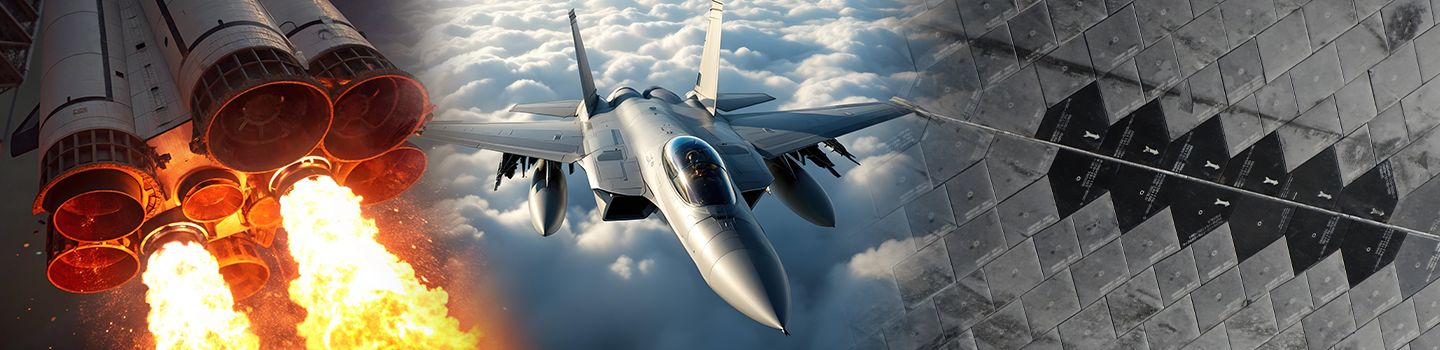
Tecniche per l’Ottimizzazione dei Materiali in ambito Aerospace
Mercoledì 11 novembre 2026
10.00AM CET
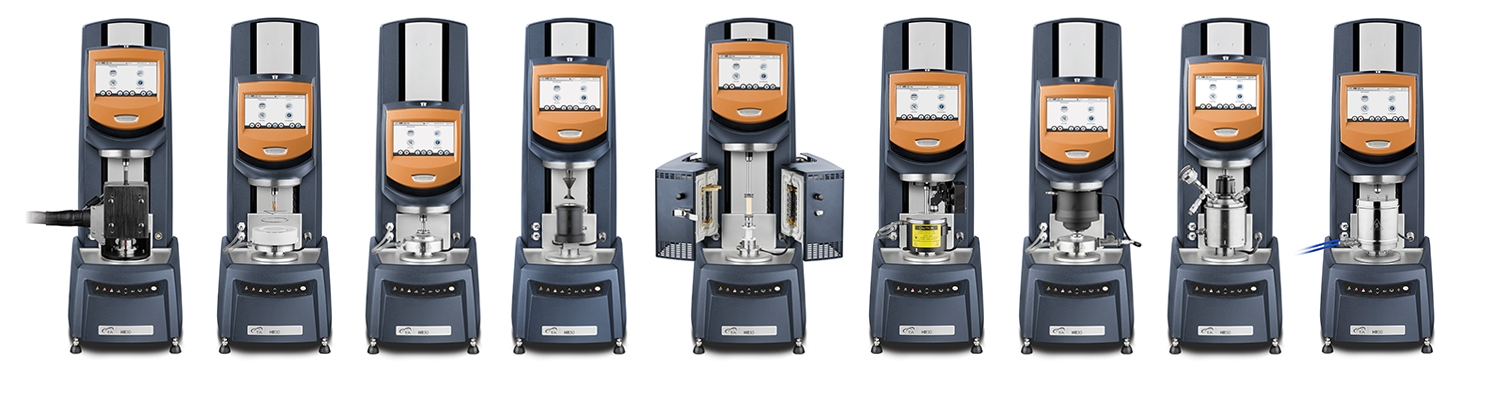
TGA Part 1 - Theory and Instrumentation
Monday, June 22 at 1:00 pm EDT
This lecture-based course covers all our TGA instruments, but is mainly designed around the Discovery TGA 55, 550, and 5500 instruments. The course will cover:
- Theory of operation
- Instrumentation
- Experimental parameters
- Software operation
- Calibration
- Maintenance and Troubleshooting
- Applications
Request More Information
Revolutionary New Fusion Cell™
Revolutionary new Fusion Cell™ further improves the performance on which you’ve come to rely. Better sensitivity, resolution, repeatability and industry leading baseline performance, enable detection of the weakest thermal transitions and the most accurate enthalpy and specific heat capacity.
Powerful TRIOS Software
Revolutionary new Fusion Cell™ further improves the performance on which you’ve come to rely. Better sensitivity, resolution, repeatability and industry leading baseline performance, enable detection of the weakest thermal transitions and the most accurate enthalpy and specific heat capacity.
Modulated DSC®
Revolutionary new Fusion Cell™ further improves the performance on which you’ve come to rely. Better sensitivity, resolution, repeatability and industry leading baseline performance, enable detection of the weakest thermal transitions and the most accurate enthalpy and specific heat capacity.
RCS 120 Refrigerated Cooling System
Revolutionary new Fusion Cell™ further improves the performance on which you’ve come to rely. Better sensitivity, resolution, repeatability and industry leading baseline performance, enable detection of the weakest thermal transitions and the most accurate enthalpy and specific heat capacity.
High Throughput DSC Autosampler
Revolutionary new Fusion Cell™ further improves the performance on which you’ve come to rely. Better sensitivity, resolution, repeatability and industry leading baseline performance, enable detection of the weakest thermal transitions and the most accurate enthalpy and specific heat capacity.
New Microscope Accessory
Revolutionary new Fusion Cell™ further improves the performance on which you’ve come to rely. Better sensitivity, resolution, repeatability and industry leading baseline performance, enable detection of the weakest thermal transitions and the most accurate enthalpy and specific heat capacity.
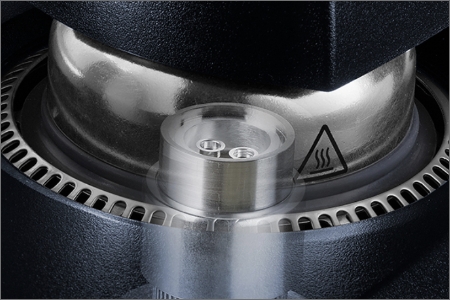
Revolutionary New Fusion Cell™
Revolutionary new Fusion Cell™ further improves the performance on which you’ve come to rely. Better sensitivity, resolution, repeatability and industry leading baseline performance, enable detection of the weakest thermal transitions and the most accurate enthalpy and specific heat capacity.
Powerful TRIOS Software
Discover powerful TRIOS software that delivers exceptional user experience in a combined package for instrument control, data analysis and reporting for thermal analysis and rheology. New features such as automated calibration routines, multiple calibration sets, real-time test method editing, and inter-laboratory data and test method sharing provide unmatched flexibility, while one-click analysis and custom reporting raise productivity to new levels.
High Throughput DSC Autosampler
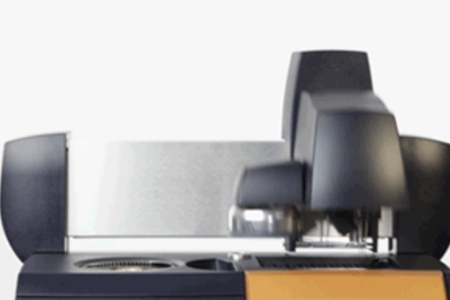
It’s hard to believe we could improve on the most reliable DSC autosampler on the market, but we did! The new linear autosampler was designed to be even more rugged and simpler to use than ever before.
Discover powerful TRIOS software that delivers exceptional user experience in a combined package for instrument control, data analysis and reporting for thermal analysis and rheology. New features such as automated calibration routines, multiple calibration sets, real-time test method editing, and inter-laboratory data and test method sharing provide unmatched flexibility, while one-click analysis and custom reporting raise productivity to new levels.
Discover powerful TRIOS software that delivers exceptional user experience in a combined package for instrument control, data analysis and reporting for thermal analysis and rheology. New features such as automated calibration routines, multiple calibration sets, real-time test method editing, and inter-laboratory data and test method sharing provide unmatched flexibility, while one-click analysis and custom reporting raise productivity to new levels.
Discover powerful TRIOS software that delivers exceptional user experience in a combined package for instrument control, data analysis and reporting for thermal analysis and rheology. New features such as automated calibration routines, multiple calibration sets, real-time test method editing, and inter-laboratory data and test method sharing provide unmatched flexibility, while one-click analysis and custom reporting raise productivity to new levels.
Discover powerful TRIOS software that delivers exceptional user experience in a combined package for instrument control, data analysis and reporting for thermal analysis and rheology. New features such as automated calibration routines, multiple calibration sets, real-time test method editing, and inter-laboratory data and test method sharing provide unmatched flexibility, while one-click analysis and custom reporting raise productivity to new levels.
Discover powerful TRIOS software that delivers exceptional user experience in a combined package for instrument control, data analysis and reporting for thermal analysis and rheology. New features such as automated calibration routines, multiple calibration sets, real-time test method editing, and inter-laboratory data and test method sharing provide unmatched flexibility, while one-click analysis and custom reporting raise productivity to new levels.
- Fusion Cell™ with patented technology provides unrivaled performance in baseline flatness, sensitivity, resolution, and reproducibility. Its superb technology enables detection of the weakest thermal transitions and the most accurate enthalpy and specific heat capacity measurements.
- Enhanced Tzero heat flow technology for the X3 guarantees temperature and enthalpy accuracy simultaneously on all three samples
- High-end performance with three sample calorimeters provide unmatched flexibility from replicate testing for statistical analysis to validation/verification against a control sample for the ultimate in certainty
- Modulated DSC® (MDSC®) for the most efficient separation of complex thermal events.
- One-Touch-Away™ User Interface enhances usability and access to data on the instrument.
- Reliable linear autosampler with 54 programmable tray positions for worry-free 24/7 operation, flexible programming of experiments, and automated calibration and verification routines.
- Widest range of refrigerated cooling options eliminates liquid nitrogen expense and ensures uninterrupted sub-ambient operation during extended autosampler routines.
- Tzero Press and pans for fast, simple, and reproducible sample preparation.
- Powerful software that delivers an exceptional user experience in a combined package for instrument control, data analysis, and reporting. Features such as automated calibration routines and real-time test method editing provide unmatched flexibility, while One-Click analysis and custom reporting raise productivity to new levels.
- Commitment to quality backed by the industry’s ONLY five-year cell and furnace warranty for peace of mind.
| Instrument Features | |
|---|---|
| Fusion Cell™ | X3 DSC |
| MDSC |  |
| Enhanced Tzero Heat Flow | |
| User Replaceable Cell | |
| 54-Position Autosampler | |
| Dual Input Gas-Delivery Manifold | |
| Color App-Style Touch Screen | |
| Included |
|
Revolutionary New Fusion Cell™
Revolutionary new Fusion Cell™ further improves the performance on which you’ve come to rely. Better sensitivity, resolution, repeatability and industry leading baseline performance, enable detection of the weakest thermal transitions and the most accurate enthalpy and specific heat capacity.
Powerful TRIOS Software
Revolutionary new Fusion Cell™ further improves the performance on which you’ve come to rely. Better sensitivity, resolution, repeatability and industry leading baseline performance, enable detection of the weakest thermal transitions and the most accurate enthalpy and specific heat capacity.
Modulated DSC®
Revolutionary new Fusion Cell™ further improves the performance on which you’ve come to rely. Better sensitivity, resolution, repeatability and industry leading baseline performance, enable detection of the weakest thermal transitions and the most accurate enthalpy and specific heat capacity.
RCS 120 Refrigerated Cooling System
Revolutionary new Fusion Cell™ further improves the performance on which you’ve come to rely. Better sensitivity, resolution, repeatability and industry leading baseline performance, enable detection of the weakest thermal transitions and the most accurate enthalpy and specific heat capacity.
High Throughput DSC Autosampler
Revolutionary new Fusion Cell™ further improves the performance on which you’ve come to rely. Better sensitivity, resolution, repeatability and industry leading baseline performance, enable detection of the weakest thermal transitions and the most accurate enthalpy and specific heat capacity.
New Microscope Accessory
Revolutionary new Fusion Cell™ further improves the performance on which you’ve come to rely. Better sensitivity, resolution, repeatability and industry leading baseline performance, enable detection of the weakest thermal transitions and the most accurate enthalpy and specific heat capacity.
Refrigerated Cooling Systems (RCS)
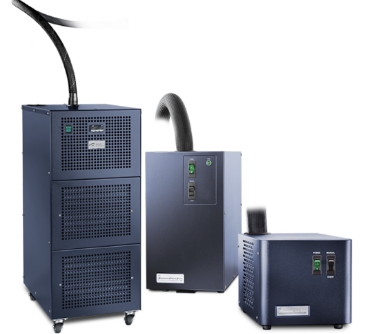
Take advantage of the convenient Refrigerated Cooling Systems (RCS) for unattended DSC and MDSC® operation over broad temperature ranges. The new RCS 120 provides enhanced safety and is the only liquid nitrogen-free system capable of conducting experiments down to -120°C.
RCS Features and Benefits:
- One-, Two-, or Three-stage refrigeration systems that achieve temperature ranges down to -40 °C, -90 °C or -120 °C
- Sealed system eliminates the need for liquid nitrogen cooling
- Enables cycling, MDSC®, controlled, and ballistic cooling experiments
- Safe, convenient, and continuous cooling operation for your laboratory needs
Refrigerated Cooling Systems (RCS)
Take advantage of the convenient Refrigerated Cooling Systems (RCS) for unattended DSC and MDSC® operation over broad temperature ranges. The new RCS 120 provides enhanced safety and is the only liquid nitrogen-free system capable of conducting experiments down to -120°C.
RCS Features and Benefits:
- One-, Two-, or Three-stage refrigeration systems that achieve temperature ranges down to -40 °C, -90 °C or -120 °C
- Sealed system eliminates the need for liquid nitrogen cooling
- Enables cycling, MDSC®, controlled, and ballistic cooling experiments
- Safe, convenient, and continuous cooling operation for your laboratory needs
TRIOS Software
Discover powerful TRIOS software that delivers exceptional user experience in a combined package for instrument control, data analysis and reporting. New features such as automated calibration routines, multiple calibration sets, real-time test method editing, and inter-laboratory data and test method sharing provide unmatched flexibility, while one-click analysis and custom reporting raise productivity to new levels.
TRIOS Features & Benefits:
- Control multiple instruments with a single PC and software package
- Overlay and compare results across techniques including DSC, TGA, DMA, SDT and rheometers.
- Unlimited licensing and free lifetime software upgrades.
- One-Click analysis for increased productivity.
- Automated custom report generation including: experimental details, data plots and tables, control charts and analysis results.
- Convenient data export to plain-text, CSV, XML, Excel®, Word®, PowerPoint®, and image formats.
- Optional TRIOS Guardian with electronic signatures for audit trail and data integrity.• Modulated DSC® (MDSC®) for the most efficient separation of complex thermal events.
Ease-of-Use
TRIOS software makes calibration of the entire line of Differential Scanning Calorimeters simple. Users can easily generate multiple calibration data sets under varying experimental conditions (e.g. different heating rates or gas selections) and seamlessly switch between them to match the experimental conditions used for sample testing. Real-time signals and the progress of running experiments is readily available, with the added capability of modifying a running method on the fly. TRIOS software offers a level of flexibility that is unmatched in the industry.
TGA Part 1 - Theory & Instrumentation
Monday, June 22 at 1:00 pm EDT
This lecture-based course covers all our TGA instruments, but is mainly designed around the Discovery TGA 55, 550, & 5500 instruments. The course will cover:
- Theory of operation
- Instrumentation
- Experimental parameters
- Software operation
- Calibration
- Maintenance & Troubleshooting
- Applications
TGA Part 2 - Applications
Tuesday, June 23 at 1:00 pm EDT
This lecture-based course covers all our TGA instruments, but is mainly designed around the Discovery TGA 55, 550, & 5500 instruments. The course will cover:
- Theory of operation
- Instrumentation
- Experimental parameters
- Software operation
- Calibration
- Maintenance & Troubleshooting
- Applications
Request More Information
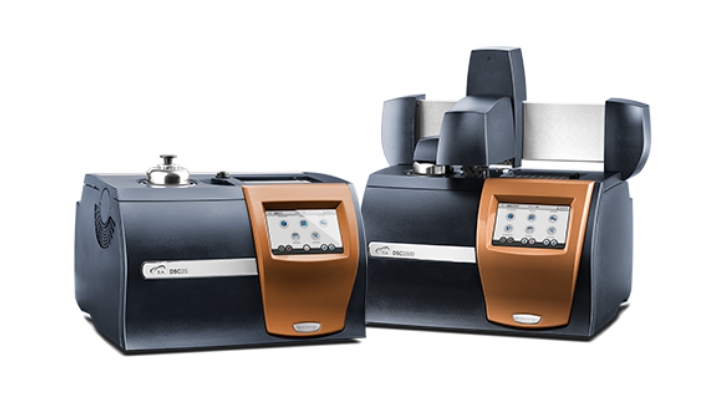
Trade in your Q Series DSC system and SAVE 40% on a NEW Discovery DSC
The world’s finest line of Differential Scanning Calorimeters
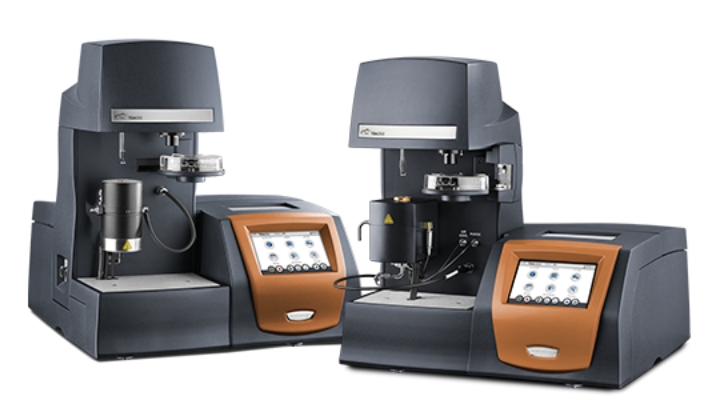
Trade in your Q Series DSC system and SAVE 40% on a NEW Discovery DSC
The world’s finest line of Differential Scanning Calorimeters
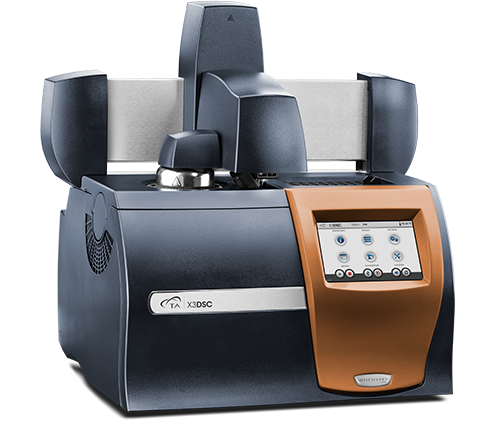
Discovery DSC
- New FusionCell™ with patented technology for unrivaled performance
- Exclusive Tzero® heat flow technology for ultimate DSC performance
- Unmatched baseline stability that requires no subtractions
- New linear 54-position autosampler
TGA Part 1 - Theory & Instrumentation
Monday, June 22 at 1:00 pm EDT
This lecture-based course covers all our TGA instruments, but is mainly designed around the Discovery TGA 55, 550, & 5500 instruments. The course will cover:
TGA Part 1 - Theory & Instrumentation
Monday, June 22 at 1:00 pm EDT
This lecture-based course covers all our TGA instruments, but is mainly designed around the Discovery TGA 55, 550, & 5500 instruments. The course will cover:
TGA Part 1 - Theory & Instrumentation
Monday, June 22 at 1:00 pm EDT
This lecture-based course covers all our TGA instruments, but is mainly designed around the Discovery TGA 55, 550, & 5500 instruments. The course will cover:
TGA Part 1 - Theory & Instrumentation
Monday, June 22 at 1:00 pm EDT
This lecture-based course covers all our TGA instruments, but is mainly designed around the Discovery TGA 55, 550, & 5500 instruments. The course will cover:
TGA Part 1 - Theory & Instrumentation
Monday, June 22 at 1:00 pm EDT
This lecture-based course covers all our TGA instruments, but is mainly designed around the Discovery TGA 55, 550, & 5500 instruments. The course will cover:
TGA Part 1 - Theory & Instrumentation
Monday, June 22 at 1:00 pm EDT
This lecture-based course covers all our TGA instruments, but is mainly designed around the Discovery TGA 55, 550, & 5500 instruments. The course will cover:
TGA Part 1 - Theory & Instrumentation
Monday, June 22 at 1:00 pm EDT
This lecture-based course covers all our TGA instruments, but is mainly designed around the Discovery TGA 55, 550, & 5500 instruments. The course will cover:
TGA Part 1 - Theory & Instrumentation
Monday, June 22 at 1:00 pm EDT
This lecture-based course covers all our TGA instruments, but is mainly designed around the Discovery TGA 55, 550, & 5500 instruments. The course will cover:
TGA Part 1 - Theory & Instrumentation
Monday, June 22 at 1:00 pm EDT
This lecture-based course covers all our TGA instruments, but is mainly designed around the Discovery TGA 55, 550, & 5500 instruments. The course will cover:
TGA Part 1 - Theory & Instrumentation
Monday, June 22 at 1:00 pm EDT
This lecture-based course covers all our TGA instruments, but is mainly designed around the Discovery TGA 55, 550, & 5500 instruments. The course will cover:
Discovery DSC
- New FusionCell™ with patented technology for unrivaled baseline flatness, sensitivity, and resolution
- Exclusive Tzero® heat flow technology for ultimate DSC performance
- Unmatched baseline stability that requires no subtractions
- New linear 54-position autosampler
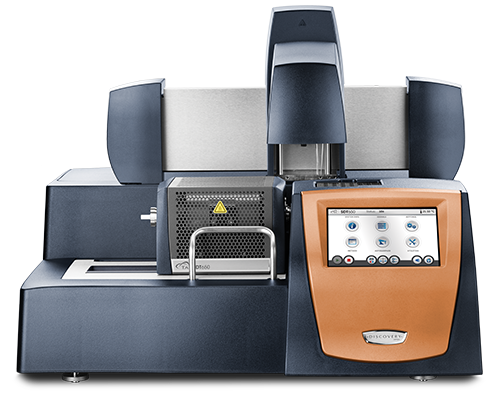
Discovery SDT
- Simultaneous DSC/TGA
- Advanced modes for heat capacity, kinetic studies, and better resolution
- Horizontal dual-beam design for superior heat flow and weight measurements
- New 30-position autosampler with programmable tray positions
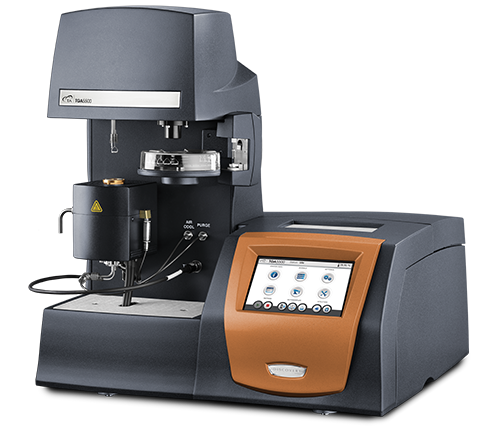
Discovery TGA
- New ultrasensitive proprietary Tru-Mass™ thermobalance
- The most accurate real-time data
- Superior atmosphere control to meet the most demanding applications
- Rugged & reliable automation
Discovery DSC
- New FusionCell™ with patented technology for unrivaled baseline flatness, sensitivity, and resolution
- Exclusive Tzero® heat flow technology for ultimate DSC performance
- Unmatched baseline stability that requires no subtractions
- New linear 54-position autosampler
Discovery DSC
- New FusionCell™ with patented technology for unrivaled baseline flatness, sensitivity, and resolution
- Exclusive Tzero® heat flow technology for ultimate DSC performance
- Unmatched baseline stability that requires no subtractions
- New linear 54-position autosampler
Discovery DSC
- New FusionCell™ with patented technology for unrivaled baseline flatness, sensitivity, and resolution
- Exclusive Tzero® heat flow technology for ultimate DSC performance
- Unmatched baseline stability that requires no subtractions
- New linear 54-position autosampler
- Come ottimizzare i processi di cura dei materiali compositi, monitorando cinetica di reazione, grado di reticolazione e temperatura di transizione vetrosa per migliorare qualità e ripetibilità produttiva.
- Come utilizzare la reologia per definire le finestre di processo, identificare il gel point e comprendere il comportamento delle resine durante la produzione di prepreg e compositi avanzati.
- Come valutare l'influenza di umidità, stoccaggio e invecchiamento sulle prestazioni e sulla processabilità dei materiali.
- Come caratterizzare il comportamento meccanico dei compositi, inclusi rigidezza, smorzamento, fatica e durabilità in funzione della temperatura e delle condizioni operative.
- Come misurare proprietà termofisiche critiche, quali conducibilità termica, diffusività termica e coefficiente di espansione termica, per supportare progettazione e gestione termica dei componenti aerospace.
- Come identificare fenomeni di degradazione e stabilità termica, analizzando composizione, perdita di massa e prodotti di decomposizione tramite tecniche avanzate di analisi termica.
- Come correlare proprietà dei materiali, parametri di processo e prestazioni finali, riducendo il rischio di difetti, rilavorazioni e guasti in servizio.
Conosci il relatore
 |
Stefano Del Buffa Application Scientist Stefano Del Buffa got his PhD in Chemical Sciences in 2016 in Florence, Italy. After serving as a researcher on composite materials and 1D/2D materials, he worked as a product specialist and application support in the field of polymer processing and characterization. He joined Waters MSD in 2026 as an Application Specialist in Thermal Analysis and Rheology. |
Registrati ora
Request More Information
* Some modules and OEM products are excluded. Trade in required to receive discount. Please contact your local TA representative for more details. Deals valid for systems purchased and delivered before September 18, 2020.